Issue 1, October 2025
First Issue
Welcome to Our Inaugural Newsletter
Green Growth Investor Series launches its first newsletter, sharing insights from Climate Week NYC 2025, the rise of AI in sustainability, founder reflections, and opportunities for global collaboration in the green economy.
Editor’s Note: Building a Global Community for Green Growth
By Aseem Trivedi, Co-Founder, Green Growth Investor Series
Green Growth was founded to connect ideas, investments, and innovation across borders, accelerating the shift toward a sustainable and circular economy. That vision has taken shape through global partnerships, investor engagement, and government collaboration.
The Green Growth Investor Series Newsletter continues this mission by sharing monthly insights on green energy, circular economy, and climate innovation. It highlights emerging technologies, investment trends, and stories proving that sustainability and profitability align.
Each issue features interviews with global leaders, practical frameworks for impact-driven enterprises, and coverage of key sustainability events. At its heart, Green Growth believes collaboration, not competition, will define the next phase of the green economy, and this newsletter invites readers to be part of that journey.
Let’s dive into this month’s theme: Insights from New York Climate Week 2025

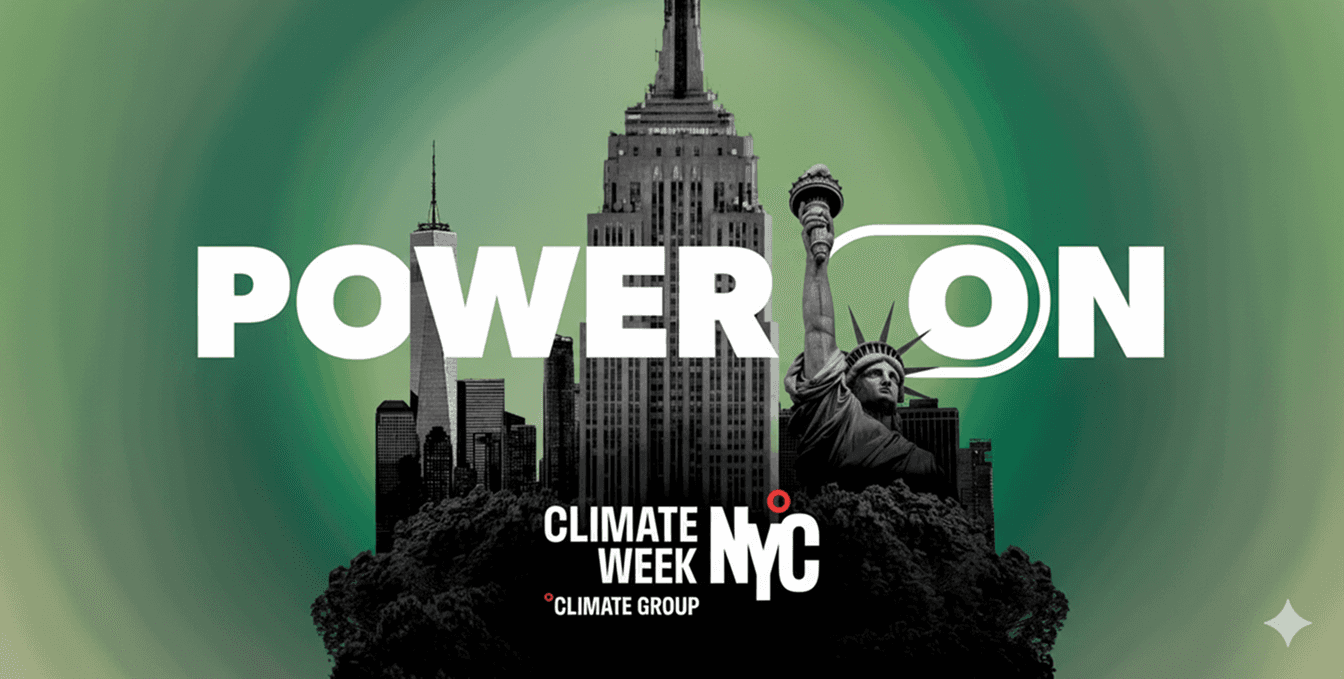
Climate Week NYC 2025: Key Insights and Trends
New York City buzzed with urgency and hope during Climate Week (Sept 21–28, 2025). Over 1,000 events and 100,000+ attendees converged to explore climate solutions across energy, finance, industry, policy, and more. Here are some top takeaways that resonated with us and align with our focus on green energy and circular economy:
Sustainability as a Business Imperative: A clear message was that sustainability is no longer a “nice-to-have," it’s now core to business strategy and investor expectations. Corporate leaders emphasized that resilience and climate action are vital for long-term value. In fact, CFOs and investors are increasingly involved in sustainability initiatives and reporting, treating them as strategic priorities. Companies are moving from pledges to practical implementation: embedding ESG factors into operations, deals, and supply chains to uncover growth opportunities and mitigate risks. The old notion that ESG is just about risk management is fading; now it’s about ROI and competitive advantage through innovation.
Collaboration Over Competition: No single entity can solve the climate crisis, and this came through loud and clear. Across panels and meetings, leaders championed partnerships and networks as force multipliers for sustainability progress. Public-private collaboration – among governments, corporations, investors, and communities – is viewed as essential to scale solutions. As one session noted, industry-wide alliances (for example, to decarbonize supply chains) allow for pooling resources and sharing knowledge in ways individual actors cannot achieve alone. In short, collective action builds resilience amid complexity. This collaborative spirit aligns perfectly with Green Growth’s vision of bridging policy and entrepreneurship. A poignant reminder echoed during the week: “No one is taller than when they bend down on one knee to lift someone else up.” This quote (shared by California Governor Gavin Newsom at the Clinton Global Initiative) underscored that lifting others, whether developing nations, frontline communities, or fellow innovators – elevates us all. Collaboration, not competition, will drive truly sustainable growth.
Technology & AI in the Spotlight: Technology, especially Artificial Intelligence, was a hot topic cutting across many Climate Week discussions. Participants highlighted AI’s potential to accelerate climate solutions, from optimizing energy use to enhancing climate data analysis. For example, AI-driven analytics can help utilities forecast demand and integrate renewables, and machine learning can improve supply chain efficiency to cut waste. Companies like Schneider Electric even showcased “AI agents” that autonomously assist with sustainability and resilience planning. However, AI’s rise is a double-edged sword. Experts warned that AI’s growing computational power is driving unprecedented energy demand itself. To meet climate goals, businesses must manage AI’s footprint – employing “frugal AI” strategies for energy-efficient models and powering data centers with renewables. The consensus is that AI, used wisely, can be a powerful enabler in the transition (e.g. AI and robotics might even help us “mine our waste stream instead of our planet” one day). But it must be deployed with sustainability in mind. The takeaway: embrace innovation like AI to drive efficiency and climate action, but do so responsibly and in tandem with human expertise (i.e. “collaborative intelligence” blending human and AI strengths).
Focus on Circular Economy Solutions: Climate Week 2025 also shone a light on the circular economy as a pathway to both reduce emissions and create economic value. In sessions on sustainable industry and waste, leaders advocated moving from the traditional “take-make-dispose” model toward circular practices, recycling materials, designing products for reuse, and regenerating natural systems. For instance, at the Nest Climate Campus, companies like Colgate and WestRock shared how they are investing in circular packaging and supply chains to cut waste and pollution (turning what was once waste into valuable resources). The idea of “place-based circularity” was discussed, emphasizing local solutions such as urban mining of electronic waste for critical minerals and community-led recycling initiatives. Circular strategies, from using recycled inputs, to product take-back programs, to bio-based materials – were presented not only as environmental best practices but as opportunities for innovation, new markets, and job creation. This trend is directly relevant to Green Growth’s emphasis on circular economy: it shows that by keeping materials in use and designing out waste, we can decarbonize supply chains and build more resilient, just communities.
Policy and Accountability Are Ramping Up: On the policy front, Climate Week underscored that regulators and governments are starting to demand more transparency and action from industry. A notable example is California’s new climate disclosure laws, the first in the U.S., which will require companies to report their carbon emissions and climate-related financial risks. Many companies are grappling with how to comply, but experts at Climate Week argued that compliance can be turned into a competitive advantage. By investing in better carbon tracking, disclosure processes, and governance, businesses not only meet regulations but also discover efficiencies (like energy cost savings) and build trust with stakeholders. Another policy theme was the pivotal role of state and local governments. From U.S. states accelerating renewable energy projects to city-led climate initiatives, subnational actors are increasingly leading the charge when national or global action lags. This trend validates our approach at Green Growth: working across borders and government levels to share best practices. The policy momentum is clear, the direction of travel is toward more climate accountability, and proactive organizations stand to benefit by staying ahead of the curve.
Challenges & Opportunities Ahead: Despite the optimism, leaders didn’t shy away from the challenges. There was sober acknowledgement that we are likely to overshoot the 1.5°C warming target, making adaptation and resilience efforts ever more critical. Financing for climate adaptation (e.g. infrastructure for extreme weather, drought-resistant agriculture) needs to scale up dramatically, but innovators see opportunity here too – some estimate trillions in untapped markets for resilience solutions. Another challenge discussed was ensuring credibility and “durability” in climate solutions: for example, not all carbon offsets are equal, and long-term carbon removal (with verified, durable impact) is gaining priority over short-term fixes. Participants stressed the need for quality data, measurement (MRV systems), and honesty about progress. The encouraging news is that climate innovation is booming, from breakthroughs in battery storage and green hydrogen, to AI-powered efficiency tools, to nature-based solutions like biochar and reforestation. The talent and technology we need largely exist; the task now is to deploy them faster and at scale. The overall mood as Climate Week closed was cautious optimism: the challenges are enormous, but the convergence of public awareness, political will (albeit uneven), and private sector ingenuity is creating a sense that “momentum is only just beginning”
Climate Week NYC 2025: Key Insights and Trends
New York City buzzed with urgency and hope during Climate Week (Sept 21–28, 2025). Over 1,000 events and 100,000+ attendees converged to explore climate solutions across energy, finance, industry, policy, and more. Here are some top takeaways that resonated with us and align with our focus on green energy and circular economy:
Sustainability as a Business Imperative: A clear message was that sustainability is no longer a “nice-to-have," it’s now core to business strategy and investor expectations. Corporate leaders emphasized that resilience and climate action are vital for long-term value. In fact, CFOs and investors are increasingly involved in sustainability initiatives and reporting, treating them as strategic priorities. Companies are moving from pledges to practical implementation: embedding ESG factors into operations, deals, and supply chains to uncover growth opportunities and mitigate risks. The old notion that ESG is just about risk management is fading; now it’s about ROI and competitive advantage through innovation.
Collaboration Over Competition: No single entity can solve the climate crisis, and this came through loud and clear. Across panels and meetings, leaders championed partnerships and networks as force multipliers for sustainability progress. Public-private collaboration – among governments, corporations, investors, and communities – is viewed as essential to scale solutions. As one session noted, industry-wide alliances (for example, to decarbonize supply chains) allow for pooling resources and sharing knowledge in ways individual actors cannot achieve alone. In short, collective action builds resilience amid complexity. This collaborative spirit aligns perfectly with Green Growth’s vision of bridging policy and entrepreneurship. A poignant reminder echoed during the week: “No one is taller than when they bend down on one knee to lift someone else up.” This quote (shared by California Governor Gavin Newsom at the Clinton Global Initiative) underscored that lifting others, whether developing nations, frontline communities, or fellow innovators – elevates us all. Collaboration, not competition, will drive truly sustainable growth.
Technology & AI in the Spotlight: Technology, especially Artificial Intelligence, was a hot topic cutting across many Climate Week discussions. Participants highlighted AI’s potential to accelerate climate solutions, from optimizing energy use to enhancing climate data analysis. For example, AI-driven analytics can help utilities forecast demand and integrate renewables, and machine learning can improve supply chain efficiency to cut waste. Companies like Schneider Electric even showcased “AI agents” that autonomously assist with sustainability and resilience planning. However, AI’s rise is a double-edged sword. Experts warned that AI’s growing computational power is driving unprecedented energy demand itself. To meet climate goals, businesses must manage AI’s footprint – employing “frugal AI” strategies for energy-efficient models and powering data centers with renewables. The consensus is that AI, used wisely, can be a powerful enabler in the transition (e.g. AI and robotics might even help us “mine our waste stream instead of our planet” one day). But it must be deployed with sustainability in mind. The takeaway: embrace innovation like AI to drive efficiency and climate action, but do so responsibly and in tandem with human expertise (i.e. “collaborative intelligence” blending human and AI strengths).
Focus on Circular Economy Solutions: Climate Week 2025 also shone a light on the circular economy as a pathway to both reduce emissions and create economic value. In sessions on sustainable industry and waste, leaders advocated moving from the traditional “take-make-dispose” model toward circular practices, recycling materials, designing products for reuse, and regenerating natural systems. For instance, at the Nest Climate Campus, companies like Colgate and WestRock shared how they are investing in circular packaging and supply chains to cut waste and pollution (turning what was once waste into valuable resources). The idea of “place-based circularity” was discussed, emphasizing local solutions such as urban mining of electronic waste for critical minerals and community-led recycling initiatives. Circular strategies, from using recycled inputs, to product take-back programs, to bio-based materials – were presented not only as environmental best practices but as opportunities for innovation, new markets, and job creation. This trend is directly relevant to Green Growth’s emphasis on circular economy: it shows that by keeping materials in use and designing out waste, we can decarbonize supply chains and build more resilient, just communities.
Policy and Accountability Are Ramping Up: On the policy front, Climate Week underscored that regulators and governments are starting to demand more transparency and action from industry. A notable example is California’s new climate disclosure laws, the first in the U.S., which will require companies to report their carbon emissions and climate-related financial risks. Many companies are grappling with how to comply, but experts at Climate Week argued that compliance can be turned into a competitive advantage. By investing in better carbon tracking, disclosure processes, and governance, businesses not only meet regulations but also discover efficiencies (like energy cost savings) and build trust with stakeholders. Another policy theme was the pivotal role of state and local governments. From U.S. states accelerating renewable energy projects to city-led climate initiatives, subnational actors are increasingly leading the charge when national or global action lags. This trend validates our approach at Green Growth: working across borders and government levels to share best practices. The policy momentum is clear, the direction of travel is toward more climate accountability, and proactive organizations stand to benefit by staying ahead of the curve.
Challenges & Opportunities Ahead: Despite the optimism, leaders didn’t shy away from the challenges. There was sober acknowledgement that we are likely to overshoot the 1.5°C warming target, making adaptation and resilience efforts ever more critical. Financing for climate adaptation (e.g. infrastructure for extreme weather, drought-resistant agriculture) needs to scale up dramatically, but innovators see opportunity here too – some estimate trillions in untapped markets for resilience solutions. Another challenge discussed was ensuring credibility and “durability” in climate solutions: for example, not all carbon offsets are equal, and long-term carbon removal (with verified, durable impact) is gaining priority over short-term fixes. Participants stressed the need for quality data, measurement (MRV systems), and honesty about progress. The encouraging news is that climate innovation is booming, from breakthroughs in battery storage and green hydrogen, to AI-powered efficiency tools, to nature-based solutions like biochar and reforestation. The talent and technology we need largely exist; the task now is to deploy them faster and at scale. The overall mood as Climate Week closed was cautious optimism: the challenges are enormous, but the convergence of public awareness, political will (albeit uneven), and private sector ingenuity is creating a sense that “momentum is only just beginning”

Founder’s Corner: Jason’s Reflections from Climate Week NYC
For a ground-level perspective on Climate Week NYC 2025, don’t miss the featured blog post by our co-founder, Jason Dodier. Jason attended the week-long climate summit and came away with profound insights, which he’s shared in a personal blog titled “Durability and Collaboration: My Climate Week Journey.” Here’s a sneak peek at what he learned:
“New York City during Climate Week had the rare kind of energy that feels both urgent and hopeful – the hum of possibility mixed with the weight of responsibility. One theme kept resurfacing: durability. Not just in carbon storage, but in commitment – the endurance it takes to translate ambition into measurable, lasting impact.”
Jason’s journey spanned from high-profile panels to late-night networking. He kicked off the week with the VoLo Foundation team and Senator Sheldon Whitehouse, discussing the importance of climate accountability in government. That set the tone for a recurring idea: real climate progress requires alignment across every level of society – policymakers, innovators, and investors pulling in the same direction. A highlight for Jason was showcasing Grain Ecosystem’s new digital MRV platform at the North American Biochar Conference just days before Climate Week. This “measure, report, verify” tool demonstrates how technology and data bring transparency to carbon removal projects (like biochar production), turning opportunities into execution with precision. Seeing people engage with data-driven climate solutions gave Jason a glimpse of what scalable carbon removal can look like in practice, a point further reinforced during Climate Week discussions about credibility in carbon markets. The consensus he observed was that nature-based solutions (e.g. biochar, reforestation) will play a big role in near-term carbon removal, but that these efforts must be backed by reliable data and a durable mindset. In Jason’s words, “durability, both in data and in mindset – is quickly becoming the new currency” in the carbon removal space.
Another key insight from Jason’s week was the critical role of state-level leadership. Many conversations, from meetings with Climeworks (a leading direct air capture company) to talks with Sweden’s Climate Ambassador, underscored that U.S. states can be powerful levers for change. Whether through innovative policies, streamlined permitting, or procurement of clean technologies, states like California (with its bold climate laws) and Rhode Island (Jason’s home state, pushing offshore wind and more) are stepping up. This resonated with Jason’s experience at Green Growth, where we see how subnational actions often drive wider impact. It’s a reminder that local and regional collaboration can achieve tangible results even when global agreements struggle.
Finally, Jason reflects on a poignant lesson about collaboration over competition. At the Clinton Global Initiative, California’s Governor Gavin Newsom said: “The real enemy isn’t industry; it’s emissions. Prosperity and decarbonization aren’t opposing forces but two sides of the same coin.” This sentiment – that we must all work together, across industries and borders, to lift each other up – left a strong impression. Jason notes that the climate community is increasingly embracing partnerships that allow farmers, foresters, indigenous leaders, technologists, and investors to share in both the impact and the rewards. The future will belong to those who recognize that climate action and economic growth can and must reinforce each other.
By the end of Climate Week, Jason felt that the momentum is only growing. The appetite, talent, and coordination are finally aligning to make durable climate solutions not just possible but inevitable. He left New York with optimism that by next year, the progress will be even more visible.
Read Jason’s full blog post on our website to delve deeper into his Climate Week 2025 experience, including more on the discussions around carbon removal technologies, the launch of our digital platform, and Jason’s take on what’s needed to maintain climate commitment for the long haul. (His insights are a great complement to the broader trends we summarized above, and we’ve made sure not to steal his thunder in those sections!) We hope his passion and on-the-ground stories inspire you as much as they inspire us.

How AI is Disrupting Every Industry; Including Green Energy
In almost every industry today, Artificial Intelligence is the buzzword du jour; and for good reason. AI and machine learning are driving a paradigm shift in how we operate, make decisions, and even conceive business models. For our audience of entrepreneurs and investors, understanding AI’s disruptive impact is crucial, especially as we apply these technologies to sustainability challenges.
AI’s Ubiquity: From finance to healthcare to energy, AI is being embedded to automate tasks, predict trends, and optimize outcomes. In manufacturing, AI algorithms predict maintenance needs and reduce downtime. In agriculture, AI-driven sensors and drones help maximize crop yields with minimal inputs. In the energy sector, AI is optimizing power grids and integrating renewable sources by balancing supply and demand in real time. This cross-sector pervasiveness of AI was clearly evident at Climate Week NYC – as noted, AI “cut across many discussions” as a key enabler of efficiency and innovation. The appeal is obvious: businesses that leverage AI can gain speed, precision, and insights that give them an edge in both profitability and sustainability.
AI in Green Energy & Circular Economy: Specifically in the green energy and circular economy realm, AI is unlocking new possibilities. Smart grids use AI to manage the variability of wind and solar power, improving reliability of clean energy. AI models are helping to design more efficient solar panels and wind turbine layouts. In the circular economy, AI and advanced robotics are being used to improve recycling systems – for example, using AI vision to sort waste or identify valuable materials to be recovered, thus “mining” waste for resources. This is turning what was once trash into economic treasure, a theme we heard during Climate Week. We’re even seeing AI help in climate science, such as analyzing satellite imagery to monitor deforestation or using machine learning to model climate risk scenarios for insurers and urban planners. In short, AI amplifies our ability to tackle climate problems by crunching complex data and automating actions at scale.
Risks and Responsibilities: Yet, for all its promise, AI comes with disruptive challenges. One is the energy and resource footprint of AI itself. Training large AI models and running data centers can consume vast amounts of electricity and water. Ironically, if we aren’t careful, the AI revolution could hinder climate goals by driving up energy demand – as Climate Week experts pointed out, AI’s boom is already straining power grids[13]. Companies must therefore invest in efficiency (choosing less energy-intensive algorithms, upgrading hardware) and in clean energy to power their AI workloads. Another concern is the ethical dimension: AI can reshape job markets and requires re-skilling workers. It can also introduce biases if not properly managed. For industries, this means disruption that must be navigated thoughtfully to ensure inclusive growth. Regulators are beginning to pay attention to AI as well, which could mean new compliance burdens around data and transparency.
The Bottom Line: For startups and innovators in our network, the takeaway is to embrace AI as a tool for good, but with eyes wide open. Incorporating AI can supercharge solutions in renewable energy, smart cities, waste reduction, and more. For example, an AI-powered platform might help investors and project developers identify the best opportunities for solar farms or bioenergy projects, or track the carbon footprint of supply chains in real time, enabling quicker action. These kinds of AI-driven solutions are attracting significant funding (indeed, just last month the Bezos Earth Fund committed $30M to scale climate AI solutions). We encourage you to explore how AI might enhance your venture’s impact and efficiency. At the same time, build sustainability into the AI you use: demand transparency from AI providers, monitor and mitigate the energy usage, and ensure that technology augments human decision-making rather than replacing the human touch. In the climate fight, AI should be seen as an accelerator, not a silver bullet. It’s a powerful part of the toolkit, but ultimately, success will come from pairing cutting-edge tech with human creativity, collaboration, and leadership.
About Green Growth Investor Series
Green Growth Investor Series (GGIS) is a platform dedicated to fostering public–private collaboration for a sustainable future. Launched with an inaugural event that brought together changemakers across sectors, GGIS champions innovation in green energy, climate tech, and circular economy solutions to help achieve global Net Zero goals.

Vision
Bridge the gap between forward-thinking public policy and bold private-sector initiative in the sustainability arena. We strive to create an environment where groundbreaking climate solutions are developed and deployed through collaboration between governments, entrepreneurs, and investors

Mission
Unite the vibrant entrepreneurial ecosystems of India, Israel, the USA, the UAE and beyond – leveraging their collective strengths for green growth. By facilitating shared learning, cross-border partnerships, and strategic investments, we accelerate the development of clean technologies and sustainable business models.
Mission
Unite the vibrant entrepreneurial ecosystems of India, Israel, the USA, the UAE and beyond – leveraging their collective strengths for green growth. By facilitating shared learning, cross-border partnerships, and strategic investments, we accelerate the development of clean technologies and sustainable business models.
Goals
Catalyze impactful projects in renewable energy, circular economy, and carbon management, while driving investment across borders. By connecting innovators, funders, and policymakers, we aim to turn each region’s sustainability ambitions into tangible achievements, empowering every nation involved to meet its climate objectives.

Goals
Catalyze impactful projects in renewable energy, circular economy, and carbon management, while driving investment across borders. By connecting innovators, funders, and policymakers, we aim to turn each region’s sustainability ambitions into tangible achievements, empowering every nation involved to meet its climate objectives.
Since our founding, we’ve seen how powerful the public-private nexus can be in generating solutions that are both economically viable and environmentally vital. From high-level policy dialogues to startup pitch sessions, our series is where ideas meet investment and action. If you share our vision of green growth through collaboration, we invite you to engage with us – be it through events, our newsletter, or partnerships.
Stay Connected – Subscribe and Join Us
Thank you for reading our first newsletter! We’re excited to build this community and keep the conversation going beyond our events. If you enjoyed this issue, be sure to subscribe to receive our monthly updates straight to your inbox (and feel free to forward this to colleagues who might be interested). In upcoming editions, you can look forward to deep dives into climate tech trends, success stories from startups in our network, policy watch updates, and more expert interviews.
Meanwhile, don’t forget to visit our website greengrowthseries.com for full articles, event announcements, and resources. This month, you’ll find Jason’s full Climate Week blog post and additional content on topics like AI in sustainability and circular economy innovations. Follow us on LinkedIn for real-time updates and community highlights – let’s grow that 300-member network into thousands, together! Our LinkedIn and social media will also share bite-sized insights and highlight opportunities for you to get involved in the green growth movement.
Finally, we’d love to hear from you. What topics would you like to see in future newsletters? Do you have a success story or insight to share with the community? Hit reply and let us know – this newsletter is a two-way conversation. Green Growth Investor Series is all about collaboration, so your voice is important in shaping the discussions ahead.
Stay tuned, stay green, and see you next month! In the spirit of Climate Week’s optimism, let’s “power on” with solutions that drive sustainable growth and a brighter future for all.
– The Green Growth Investor Series Team
About Green Growth Investor Series
Green Growth Investor Series (GGIS) is a platform dedicated to fostering public–private collaboration for a sustainable future. Launched with an inaugural event that brought together changemakers across sectors, GGIS champions innovation in green energy, climate tech, and circular economy solutions to help achieve global Net Zero goals.
Vision
Bridge the gap between forward-thinking public policy and bold private-sector initiative in the sustainability arena. We strive to create an environment where groundbreaking climate solutions are developed and deployed through collaboration between governments, entrepreneurs, and investors
When you know you’re doing things right, there's a sense of confidence and clarity that guides your actions. Every step you take is backed by thoughtful planning and a clear understanding of your goals.
Mission
Bridge the gap between forward-thinking public policy and bold private-sector initiative in the sustainability arena. We strive to create an environment where groundbreaking climate solutions are developed and deployed through collaboration between governments, entrepreneurs, and investors.
Vision
Unite the vibrant entrepreneurial ecosystems of India, Israel, the USA, the UAE and beyond – leveraging their collective strengths for green growth. By facilitating shared learning, cross-border partnerships, and strategic investments, we accelerate the development of clean technologies and sustainable business models.
Goals
Catalyze impactful projects in renewable energy, circular economy, and carbon management, while driving investment across borders. By connecting innovators, funders, and policymakers, we aim to turn each region’s sustainability ambitions into tangible achievements, empowering every nation involved to meet its climate objectives.
Since our founding, we’ve seen how powerful the public-private nexus can be in generating solutions that are both economically viable and environmentally vital. From high-level policy dialogues to startup pitch sessions, our series is where ideas meet investment and action. If you share our vision of green growth through collaboration, we invite you to engage with us – be it through events, our newsletter, or partnerships.
Since our founding, we’ve seen how powerful the public-private nexus can be in generating solutions that are both economically viable and environmentally vital. From high-level policy dialogues to startup pitch sessions, our series is where ideas meet investment and action. If you share our vision of green growth through collaboration, we invite you to engage with us – be it through events, our newsletter, or partnerships.
Stay Connected – Subscribe and Join Us
Thank you for reading our first newsletter! We’re excited to build this community and keep the conversation going beyond our events. If you enjoyed this issue, be sure to subscribe to receive our monthly updates straight to your inbox (and feel free to forward this to colleagues who might be interested). In upcoming editions, you can look forward to deep dives into climate tech trends, success stories from startups in our network, policy watch updates, and more expert interviews.
Meanwhile, don’t forget to visit our website greengrowthseries.com for full articles, event announcements, and resources. This month, you’ll find Jason’s full Climate Week blog post and additional content on topics like AI in sustainability and circular economy innovations. Follow us on LinkedIn for real-time updates and community highlights – let’s grow that 300-member network into thousands, together! Our LinkedIn and social media will also share bite-sized insights and highlight opportunities for you to get involved in the green growth movement.
Finally, we’d love to hear from you. What topics would you like to see in future newsletters? Do you have a success story or insight to share with the community? Hit reply and let us know – this newsletter is a two-way conversation. Green Growth Investor Series is all about collaboration, so your voice is important in shaping the discussions ahead.
Stay tuned, stay green, and see you next month! In the spirit of Climate Week’s optimism, let’s “power on” with solutions that drive sustainable growth and a brighter future for all.
– The Green Growth Investor Series Team
Issue 1, October 2025
First Issue
Welcome to Our Inaugural Newsletter
Green Growth Investor Series launches its first newsletter, sharing insights from Climate Week NYC 2025, the rise of AI in sustainability, founder reflections, and opportunities for global collaboration in the green economy.
Editor’s Note: Building a Global Community for Green Growth
By Aseem Trivedi, Co-Founder, Green Growth Investor Series
Green Growth was founded to connect ideas, investments, and innovation across borders, accelerating the shift toward a sustainable and circular economy. That vision has taken shape through global partnerships, investor engagement, and government collaboration.
The Green Growth Investor Series Newsletter continues this mission by sharing monthly insights on green energy, circular economy, and climate innovation. It highlights emerging technologies, investment trends, and stories proving that sustainability and profitability align.
Each issue features interviews with global leaders, practical frameworks for impact-driven enterprises, and coverage of key sustainability events. At its heart, Green Growth believes collaboration, not competition, will define the next phase of the green economy, and this newsletter invites readers to be part of that journey.
Let’s dive into this month’s theme: Insights from New York Climate Week 2025
Climate Week NYC 2025: Key Insights and Trends
New York City buzzed with urgency and hope during Climate Week (Sept 21–28, 2025). Over 1,000 events and 100,000+ attendees converged to explore climate solutions across energy, finance, industry, policy, and more. Here are some top takeaways that resonated with us and align with our focus on green energy and circular economy:
Sustainability as a Business Imperative: A clear message was that sustainability is no longer a “nice-to-have," it’s now core to business strategy and investor expectations. Corporate leaders emphasized that resilience and climate action are vital for long-term value. In fact, CFOs and investors are increasingly involved in sustainability initiatives and reporting, treating them as strategic priorities. Companies are moving from pledges to practical implementation: embedding ESG factors into operations, deals, and supply chains to uncover growth opportunities and mitigate risks. The old notion that ESG is just about risk management is fading; now it’s about ROI and competitive advantage through innovation.
Collaboration Over Competition: No single entity can solve the climate crisis, and this came through loud and clear. Across panels and meetings, leaders championed partnerships and networks as force multipliers for sustainability progress. Public-private collaboration – among governments, corporations, investors, and communities – is viewed as essential to scale solutions. As one session noted, industry-wide alliances (for example, to decarbonize supply chains) allow for pooling resources and sharing knowledge in ways individual actors cannot achieve alone. In short, collective action builds resilience amid complexity. This collaborative spirit aligns perfectly with Green Growth’s vision of bridging policy and entrepreneurship. A poignant reminder echoed during the week: “No one is taller than when they bend down on one knee to lift someone else up.” This quote (shared by California Governor Gavin Newsom at the Clinton Global Initiative) underscored that lifting others, whether developing nations, frontline communities, or fellow innovators – elevates us all. Collaboration, not competition, will drive truly sustainable growth.
Technology & AI in the Spotlight: Technology, especially Artificial Intelligence, was a hot topic cutting across many Climate Week discussions. Participants highlighted AI’s potential to accelerate climate solutions, from optimizing energy use to enhancing climate data analysis. For example, AI-driven analytics can help utilities forecast demand and integrate renewables, and machine learning can improve supply chain efficiency to cut waste. Companies like Schneider Electric even showcased “AI agents” that autonomously assist with sustainability and resilience planning. However, AI’s rise is a double-edged sword. Experts warned that AI’s growing computational power is driving unprecedented energy demand itself. To meet climate goals, businesses must manage AI’s footprint – employing “frugal AI” strategies for energy-efficient models and powering data centers with renewables. The consensus is that AI, used wisely, can be a powerful enabler in the transition (e.g. AI and robotics might even help us “mine our waste stream instead of our planet” one day). But it must be deployed with sustainability in mind. The takeaway: embrace innovation like AI to drive efficiency and climate action, but do so responsibly and in tandem with human expertise (i.e. “collaborative intelligence” blending human and AI strengths).
Focus on Circular Economy Solutions: Climate Week 2025 also shone a light on the circular economy as a pathway to both reduce emissions and create economic value. In sessions on sustainable industry and waste, leaders advocated moving from the traditional “take-make-dispose” model toward circular practices, recycling materials, designing products for reuse, and regenerating natural systems. For instance, at the Nest Climate Campus, companies like Colgate and WestRock shared how they are investing in circular packaging and supply chains to cut waste and pollution (turning what was once waste into valuable resources). The idea of “place-based circularity” was discussed, emphasizing local solutions such as urban mining of electronic waste for critical minerals and community-led recycling initiatives. Circular strategies, from using recycled inputs, to product take-back programs, to bio-based materials – were presented not only as environmental best practices but as opportunities for innovation, new markets, and job creation. This trend is directly relevant to Green Growth’s emphasis on circular economy: it shows that by keeping materials in use and designing out waste, we can decarbonize supply chains and build more resilient, just communities.
Policy and Accountability Are Ramping Up: On the policy front, Climate Week underscored that regulators and governments are starting to demand more transparency and action from industry. A notable example is California’s new climate disclosure laws, the first in the U.S., which will require companies to report their carbon emissions and climate-related financial risks. Many companies are grappling with how to comply, but experts at Climate Week argued that compliance can be turned into a competitive advantage. By investing in better carbon tracking, disclosure processes, and governance, businesses not only meet regulations but also discover efficiencies (like energy cost savings) and build trust with stakeholders. Another policy theme was the pivotal role of state and local governments. From U.S. states accelerating renewable energy projects to city-led climate initiatives, subnational actors are increasingly leading the charge when national or global action lags. This trend validates our approach at Green Growth: working across borders and government levels to share best practices. The policy momentum is clear, the direction of travel is toward more climate accountability, and proactive organizations stand to benefit by staying ahead of the curve.
Challenges & Opportunities Ahead: Despite the optimism, leaders didn’t shy away from the challenges. There was sober acknowledgement that we are likely to overshoot the 1.5°C warming target, making adaptation and resilience efforts ever more critical. Financing for climate adaptation (e.g. infrastructure for extreme weather, drought-resistant agriculture) needs to scale up dramatically, but innovators see opportunity here too – some estimate trillions in untapped markets for resilience solutions. Another challenge discussed was ensuring credibility and “durability” in climate solutions: for example, not all carbon offsets are equal, and long-term carbon removal (with verified, durable impact) is gaining priority over short-term fixes. Participants stressed the need for quality data, measurement (MRV systems), and honesty about progress. The encouraging news is that climate innovation is booming, from breakthroughs in battery storage and green hydrogen, to AI-powered efficiency tools, to nature-based solutions like biochar and reforestation. The talent and technology we need largely exist; the task now is to deploy them faster and at scale. The overall mood as Climate Week closed was cautious optimism: the challenges are enormous, but the convergence of public awareness, political will (albeit uneven), and private sector ingenuity is creating a sense that “momentum is only just beginning”
Founder’s Corner: Jason’s Reflections from Climate Week NYC
For a ground-level perspective on Climate Week NYC 2025, don’t miss the featured blog post by our co-founder, Jason Dodier. Jason attended the week-long climate summit and came away with profound insights, which he’s shared in a personal blog titled “Durability and Collaboration: My Climate Week Journey.” Here’s a sneak peek at what he learned:
“New York City during Climate Week had the rare kind of energy that feels both urgent and hopeful – the hum of possibility mixed with the weight of responsibility. One theme kept resurfacing: durability. Not just in carbon storage, but in commitment – the endurance it takes to translate ambition into measurable, lasting impact.”
Jason’s journey spanned from high-profile panels to late-night networking. He kicked off the week with the VoLo Foundation team and Senator Sheldon Whitehouse, discussing the importance of climate accountability in government. That set the tone for a recurring idea: real climate progress requires alignment across every level of society – policymakers, innovators, and investors pulling in the same direction. A highlight for Jason was showcasing Grain Ecosystem’s new digital MRV platform at the North American Biochar Conference just days before Climate Week. This “measure, report, verify” tool demonstrates how technology and data bring transparency to carbon removal projects (like biochar production), turning opportunities into execution with precision. Seeing people engage with data-driven climate solutions gave Jason a glimpse of what scalable carbon removal can look like in practice, a point further reinforced during Climate Week discussions about credibility in carbon markets. The consensus he observed was that nature-based solutions (e.g. biochar, reforestation) will play a big role in near-term carbon removal, but that these efforts must be backed by reliable data and a durable mindset. In Jason’s words, “durability, both in data and in mindset – is quickly becoming the new currency” in the carbon removal space.
Another key insight from Jason’s week was the critical role of state-level leadership. Many conversations, from meetings with Climeworks (a leading direct air capture company) to talks with Sweden’s Climate Ambassador, underscored that U.S. states can be powerful levers for change. Whether through innovative policies, streamlined permitting, or procurement of clean technologies, states like California (with its bold climate laws) and Rhode Island (Jason’s home state, pushing offshore wind and more) are stepping up. This resonated with Jason’s experience at Green Growth, where we see how subnational actions often drive wider impact. It’s a reminder that local and regional collaboration can achieve tangible results even when global agreements struggle.
Finally, Jason reflects on a poignant lesson about collaboration over competition. At the Clinton Global Initiative, California’s Governor Gavin Newsom said: “The real enemy isn’t industry; it’s emissions. Prosperity and decarbonization aren’t opposing forces but two sides of the same coin.” This sentiment – that we must all work together, across industries and borders, to lift each other up – left a strong impression. Jason notes that the climate community is increasingly embracing partnerships that allow farmers, foresters, indigenous leaders, technologists, and investors to share in both the impact and the rewards. The future will belong to those who recognize that climate action and economic growth can and must reinforce each other.
By the end of Climate Week, Jason felt that the momentum is only growing. The appetite, talent, and coordination are finally aligning to make durable climate solutions not just possible but inevitable. He left New York with optimism that by next year, the progress will be even more visible.
Read Jason’s full blog post on our website to delve deeper into his Climate Week 2025 experience, including more on the discussions around carbon removal technologies, the launch of our digital platform, and Jason’s take on what’s needed to maintain climate commitment for the long haul. (His insights are a great complement to the broader trends we summarized above, and we’ve made sure not to steal his thunder in those sections!) We hope his passion and on-the-ground stories inspire you as much as they inspire us.
How AI is Disrupting Every Industry; Including Green Energy
In almost every industry today, Artificial Intelligence is the buzzword du jour; and for good reason. AI and machine learning are driving a paradigm shift in how we operate, make decisions, and even conceive business models. For our audience of entrepreneurs and investors, understanding AI’s disruptive impact is crucial, especially as we apply these technologies to sustainability challenges.
AI’s Ubiquity: From finance to healthcare to energy, AI is being embedded to automate tasks, predict trends, and optimize outcomes. In manufacturing, AI algorithms predict maintenance needs and reduce downtime. In agriculture, AI-driven sensors and drones help maximize crop yields with minimal inputs. In the energy sector, AI is optimizing power grids and integrating renewable sources by balancing supply and demand in real time. This cross-sector pervasiveness of AI was clearly evident at Climate Week NYC – as noted, AI “cut across many discussions” as a key enabler of efficiency and innovation. The appeal is obvious: businesses that leverage AI can gain speed, precision, and insights that give them an edge in both profitability and sustainability.
AI in Green Energy & Circular Economy: Specifically in the green energy and circular economy realm, AI is unlocking new possibilities. Smart grids use AI to manage the variability of wind and solar power, improving reliability of clean energy. AI models are helping to design more efficient solar panels and wind turbine layouts. In the circular economy, AI and advanced robotics are being used to improve recycling systems – for example, using AI vision to sort waste or identify valuable materials to be recovered, thus “mining” waste for resources. This is turning what was once trash into economic treasure, a theme we heard during Climate Week. We’re even seeing AI help in climate science, such as analyzing satellite imagery to monitor deforestation or using machine learning to model climate risk scenarios for insurers and urban planners. In short, AI amplifies our ability to tackle climate problems by crunching complex data and automating actions at scale.
Risks and Responsibilities: Yet, for all its promise, AI comes with disruptive challenges. One is the energy and resource footprint of AI itself. Training large AI models and running data centers can consume vast amounts of electricity and water. Ironically, if we aren’t careful, the AI revolution could hinder climate goals by driving up energy demand – as Climate Week experts pointed out, AI’s boom is already straining power grids[13]. Companies must therefore invest in efficiency (choosing less energy-intensive algorithms, upgrading hardware) and in clean energy to power their AI workloads. Another concern is the ethical dimension: AI can reshape job markets and requires re-skilling workers. It can also introduce biases if not properly managed. For industries, this means disruption that must be navigated thoughtfully to ensure inclusive growth. Regulators are beginning to pay attention to AI as well, which could mean new compliance burdens around data and transparency.
The Bottom Line: For startups and innovators in our network, the takeaway is to embrace AI as a tool for good, but with eyes wide open. Incorporating AI can supercharge solutions in renewable energy, smart cities, waste reduction, and more. For example, an AI-powered platform might help investors and project developers identify the best opportunities for solar farms or bioenergy projects, or track the carbon footprint of supply chains in real time, enabling quicker action. These kinds of AI-driven solutions are attracting significant funding (indeed, just last month the Bezos Earth Fund committed $30M to scale climate AI solutions). We encourage you to explore how AI might enhance your venture’s impact and efficiency. At the same time, build sustainability into the AI you use: demand transparency from AI providers, monitor and mitigate the energy usage, and ensure that technology augments human decision-making rather than replacing the human touch. In the climate fight, AI should be seen as an accelerator, not a silver bullet. It’s a powerful part of the toolkit, but ultimately, success will come from pairing cutting-edge tech with human creativity, collaboration, and leadership.
About Green Growth Investor Series
Green Growth Investor Series (GGIS) is a platform dedicated to fostering public–private collaboration for a sustainable future. Launched with an inaugural event that brought together changemakers across sectors, GGIS champions innovation in green energy, climate tech, and circular economy solutions to help achieve global Net Zero goals.
Vision
Bridge the gap between forward-thinking public policy and bold private-sector initiative in the sustainability arena. We strive to create an environment where groundbreaking climate solutions are developed and deployed through collaboration between governments, entrepreneurs, and investors
Vision
Bridge the gap between forward-thinking public policy and bold private-sector initiative in the sustainability arena. We strive to create an environment where groundbreaking climate solutions are developed and deployed through collaboration between governments, entrepreneurs, and investors.
Mission
Unite the vibrant entrepreneurial ecosystems of India, Israel, the USA, the UAE and beyond – leveraging their collective strengths for green growth. By facilitating shared learning, cross-border partnerships, and strategic investments, we accelerate the development of clean technologies and sustainable business models.
Goals
Catalyze impactful projects in renewable energy, circular economy, and carbon management, while driving investment across borders. By connecting innovators, funders, and policymakers, we aim to turn each region’s sustainability ambitions into tangible achievements, empowering every nation involved to meet its climate objectives.
Goals
Catalyze impactful projects in renewable energy, circular economy, and carbon management, while driving investment across borders. By connecting innovators, funders, and policymakers, we aim to turn each region’s sustainability ambitions into tangible achievements, empowering every nation involved to meet its climate objectives.
Since our founding, we’ve seen how powerful the public-private nexus can be in generating solutions that are both economically viable and environmentally vital. From high-level policy dialogues to startup pitch sessions, our series is where ideas meet investment and action. If you share our vision of green growth through collaboration, we invite you to engage with us – be it through events, our newsletter, or partnerships.
Stay Connected – Subscribe and Join Us
Thank you for reading our first newsletter! We’re excited to build this community and keep the conversation going beyond our events. If you enjoyed this issue, be sure to subscribe to receive our monthly updates straight to your inbox (and feel free to forward this to colleagues who might be interested). In upcoming editions, you can look forward to deep dives into climate tech trends, success stories from startups in our network, policy watch updates, and more expert interviews.
Meanwhile, don’t forget to visit our website greengrowthseries.com for full articles, event announcements, and resources. This month, you’ll find Jason’s full Climate Week blog post and additional content on topics like AI in sustainability and circular economy innovations. Follow us on LinkedIn for real-time updates and community highlights – let’s grow that 300-member network into thousands, together! Our LinkedIn and social media will also share bite-sized insights and highlight opportunities for you to get involved in the green growth movement.
Finally, we’d love to hear from you. What topics would you like to see in future newsletters? Do you have a success story or insight to share with the community? Hit reply and let us know – this newsletter is a two-way conversation. Green Growth Investor Series is all about collaboration, so your voice is important in shaping the discussions ahead.
Stay tuned, stay green, and see you next month! In the spirit of Climate Week’s optimism, let’s “power on” with solutions that drive sustainable growth and a brighter future for all.
– The Green Growth Investor Series Team
About Green Growth Investor Series
Green Growth Investor Series (GGIS) is a platform dedicated to fostering public–private collaboration for a sustainable future. Launched with an inaugural event that brought together changemakers across sectors, GGIS champions innovation in green energy, climate tech, and circular economy solutions to help achieve global Net Zero goals.
Vision
Bridge the gap between forward-thinking public policy and bold private-sector initiative in the sustainability arena. We strive to create an environment where groundbreaking climate solutions are developed and deployed through collaboration between governments, entrepreneurs, and investors
Mission
Bridge the gap between forward-thinking public policy and bold private-sector initiative in the sustainability arena. We strive to create an environment where groundbreaking climate solutions are developed and deployed through collaboration between governments, entrepreneurs, and investors.
Vision
Unite the vibrant entrepreneurial ecosystems of India, Israel, the USA, the UAE and beyond – leveraging their collective strengths for green growth. By facilitating shared learning, cross-border partnerships, and strategic investments, we accelerate the development of clean technologies and sustainable business models.
Goals
Catalyze impactful projects in renewable energy, circular economy, and carbon management, while driving investment across borders. By connecting innovators, funders, and policymakers, we aim to turn each region’s sustainability ambitions into tangible achievements, empowering every nation involved to meet its climate objectives.
Since our founding, we’ve seen how powerful the public-private nexus can be in generating solutions that are both economically viable and environmentally vital. From high-level policy dialogues to startup pitch sessions, our series is where ideas meet investment and action. If you share our vision of green growth through collaboration, we invite you to engage with us – be it through events, our newsletter, or partnerships.
Since our founding, we’ve seen how powerful the public-private nexus can be in generating solutions that are both economically viable and environmentally vital. From high-level policy dialogues to startup pitch sessions, our series is where ideas meet investment and action. If you share our vision of green growth through collaboration, we invite you to engage with us – be it through events, our newsletter, or partnerships.
Stay Connected – Subscribe and Join Us
Thank you for reading our first newsletter! We’re excited to build this community and keep the conversation going beyond our events. If you enjoyed this issue, be sure to subscribe to receive our monthly updates straight to your inbox (and feel free to forward this to colleagues who might be interested). In upcoming editions, you can look forward to deep dives into climate tech trends, success stories from startups in our network, policy watch updates, and more expert interviews.
Meanwhile, don’t forget to visit our website greengrowthseries.com for full articles, event announcements, and resources. This month, you’ll find Jason’s full Climate Week blog post and additional content on topics like AI in sustainability and circular economy innovations. Follow us on LinkedIn for real-time updates and community highlights – let’s grow that 300-member network into thousands, together! Our LinkedIn and social media will also share bite-sized insights and highlight opportunities for you to get involved in the green growth movement.
Finally, we’d love to hear from you. What topics would you like to see in future newsletters? Do you have a success story or insight to share with the community? Hit reply and let us know – this newsletter is a two-way conversation. Green Growth Investor Series is all about collaboration, so your voice is important in shaping the discussions ahead.
Stay tuned, stay green, and see you next month! In the spirit of Climate Week’s optimism, let’s “power on” with solutions that drive sustainable growth and a brighter future for all.
– The Green Growth Investor Series Team
Stay Connected – Subscribe and Join Us
Stay tuned, stay green, and see you next month! In the spirit of Climate Week’s optimism, let’s “power on” with solutions that drive sustainable growth and a brighter future for all.